Modern industrial drones require stable data links over vast areas. Standard controllers often lose signal at critical moments. A long distance signal amplifier solves this connectivity problem effectively. It strengthens the wireless bond between the pilot and the UAV. This technology ensures safe flights and high-quality data transmission.
Engineers use these amplifiers to bypass physical and electromagnetic obstacles. They play a vital role in professional drone communication systems. This guide explores how these devices function in real-world scenarios. We will examine the technical specs and practical benefits for operators.
Defining the Long Distance Signal Amplifier
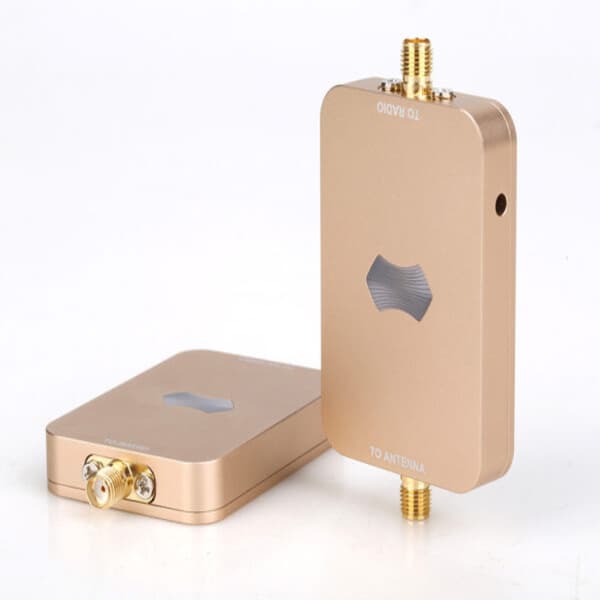
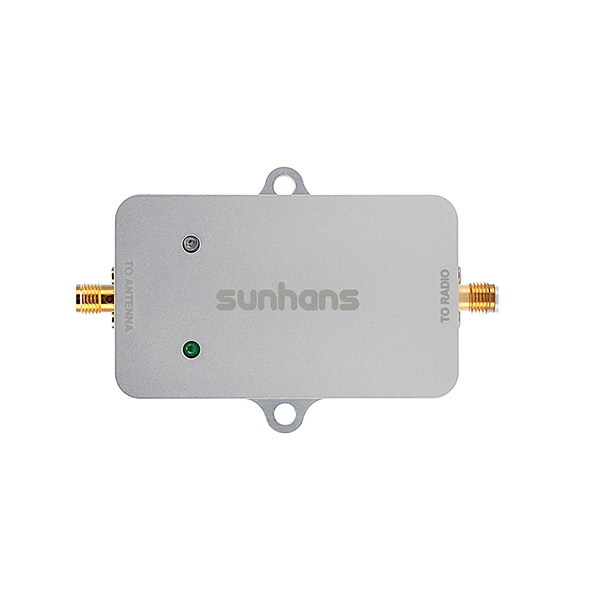
A long distance signal amplifier is a specialized hardware component. It boosts the power of transmitted and received radio signals. Most units operate on the 2.4GHz or 5.8GHz bands. They act as a megaphone for your drone’s wireless voice.
The Mechanics of Signal Boosting
These devices use Bi-Directional Amplification (BDA) technology. This means they amplify the control signal going out. Simultaneously, they amplify the video telemetry coming back in. This dual action maintains a perfect “handshake” between devices.
Key Technical Components
High-quality boosters feature low-noise amplifiers (LNA) for reception. They also use high-power amplifiers (HPA) for transmission. CNC-machined aluminum housings often protect these delicate internal circuits. This material provides excellent shielding against external electronic interference.

The Vital Role in Drone Communication Systems
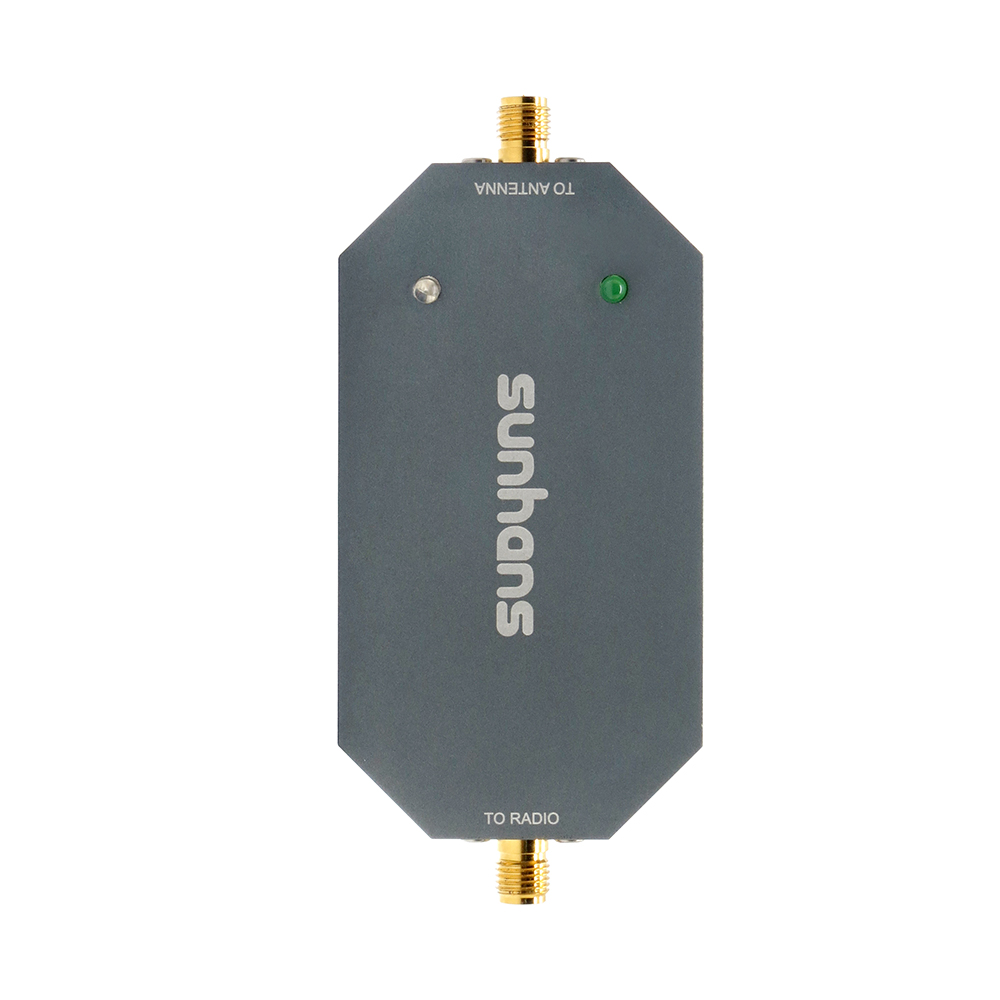
Every drone communication system relies on a clear radio path. However, distance and terrain often weaken these invisible waves. A signal amplifier acts as a bridge over these gaps.
-
Eliminating Latency: Fast signal processing reduces control lag significantly.
-
Enhancing Video Feed: High-power links prevent video stuttering at long range.
-
Expanding Mission Radius: Operators can fly further with complete confidence.
-
Improving Safety: Stronger signals reduce the risk of “Return to Home” events.
Professional pilots often integrate these boosters into their ground stations. This setup allows for precise control during complex industrial inspections. Explore our high-power drone signal solutions to see the latest technical advancements.
How Do Amplifiers Enhance UAV Range?
Range is the most critical metric for many drone missions. A long distance signal amplifier increases the effective ERP (Effective Radiated Power).
Overcoming the Inverse Square Law
Radio signals naturally weaken as they travel through space. This physical law limits the reach of standard equipment. High-power amplifiers counteract this loss by increasing the starting signal strength. A 4000mW output can push signals through dense urban clutter.
Improving Signal-to-Noise Ratio (SNR)
Noise is the enemy of any drone communication system. Amplifiers with low noise figures filter out “static” from the air. This results in a cleaner, more reliable data stream. This clarity is essential for high-resolution mapping and surveying tasks.

Practical Applications in Modern Industries
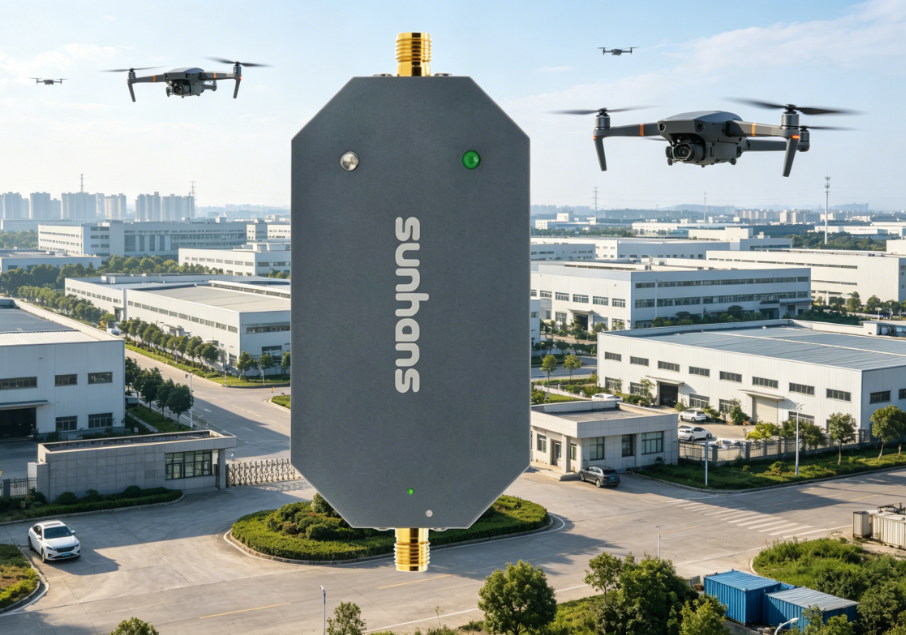
Different sectors utilize these amplifiers to achieve specific goals. Reliability is the common requirement across all professional applications.
Agricultural Spraying and Mapping
Farms often cover hundreds of contiguous acres of land. Drones must fly far from the base station to be efficient. A long distance signal amplifier ensures constant telemetry across large fields. This prevents gaps in the final multispectral crop maps.
Search and Rescue (SAR) Missions
Rescue teams operate in challenging environments like deep forests. Trees and hills can easily block a standard radio signal. High-gain boosters help signals penetrate these natural barriers effectively. This allows drones to find missing persons in difficult terrain.
Power Line and Infrastructure Inspection
High-voltage lines create massive amounts of electromagnetic noise. This noise can overwhelm a weak drone signal quickly. Industrial signal amplifiers provide the “loudness” needed to overcome this interference. This keeps the pilot in control near sensitive electrical equipment.
Choosing the Right Frequency: 2.4GHz vs. 5.8GHz
Most drone communication systems offer two primary frequency choices. Each band benefits differently from a long distance signal amplifier.
-
2.4GHz Band: This frequency penetrates solid objects more effectively. It is great for long-distance flights with some obstructions.
-
5.8GHz Band: This band offers much higher data speeds. It is the gold standard for high-definition FPV video feeds.
-
Dual-Band Systems: Advanced routers use amplifiers on both bands simultaneously. This provides the ultimate level of link redundancy and safety.
Operators should choose their amplifier based on their specific environment. For example, urban pilots often prefer 5.8GHz to avoid local WiFi noise. Rural pilots might choose 2.4GHz for the best possible absolute range.
Installation and Optimization Best Practices
Proper setup is essential to get the most from your gear. Even the best long distance signal amplifier needs correct placement.
-
Antenna Height: Always place your ground station antennas as high as possible.
-
Cable Quality: Use low-loss coaxial cables like RG-400 or LMR-240.
-
Power Stability: Ensure your booster has a steady 12V or 24V DC supply.
-
Line of Sight: Maintain a clear path between the amplifier and the drone.
Following these steps will maximize your signal footprint during every flight.
The Future of Long Distance Drone Links
The industry is moving toward smarter, more adaptive amplification systems. Future amplifiers will use AI to adjust power levels dynamically. This will save battery life while maintaining a perfect link at all times.
Furthermore, the integration of WiFi 6 technology will increase bandwidth. We will see even lower latency in future drone communication systems. This progress makes remote operations safer and more efficient for everyone involved.

Securing Your Air Link
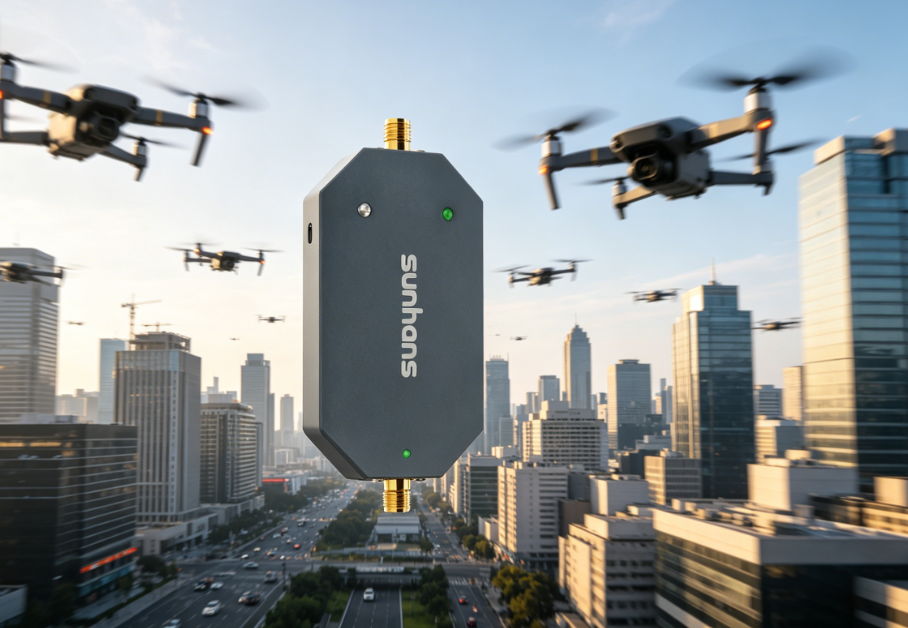
A long distance signal amplifier is more than just a luxury. It is a necessary tool for serious industrial drone operators. These devices provide the power and clarity required for mission success.
By boosting your signal, you protect your expensive drone assets. You also ensure that your data arrives safely and without interruption. Investing in high-quality drone communication systems pays off in every successful flight.
Always prioritize link stability over raw speed for professional work. Choose equipment that fits your specific operational environment and goals. The sky is no longer the limit when your signal stays strong. Elevate your drone capabilities by choosing the right amplification technology today.